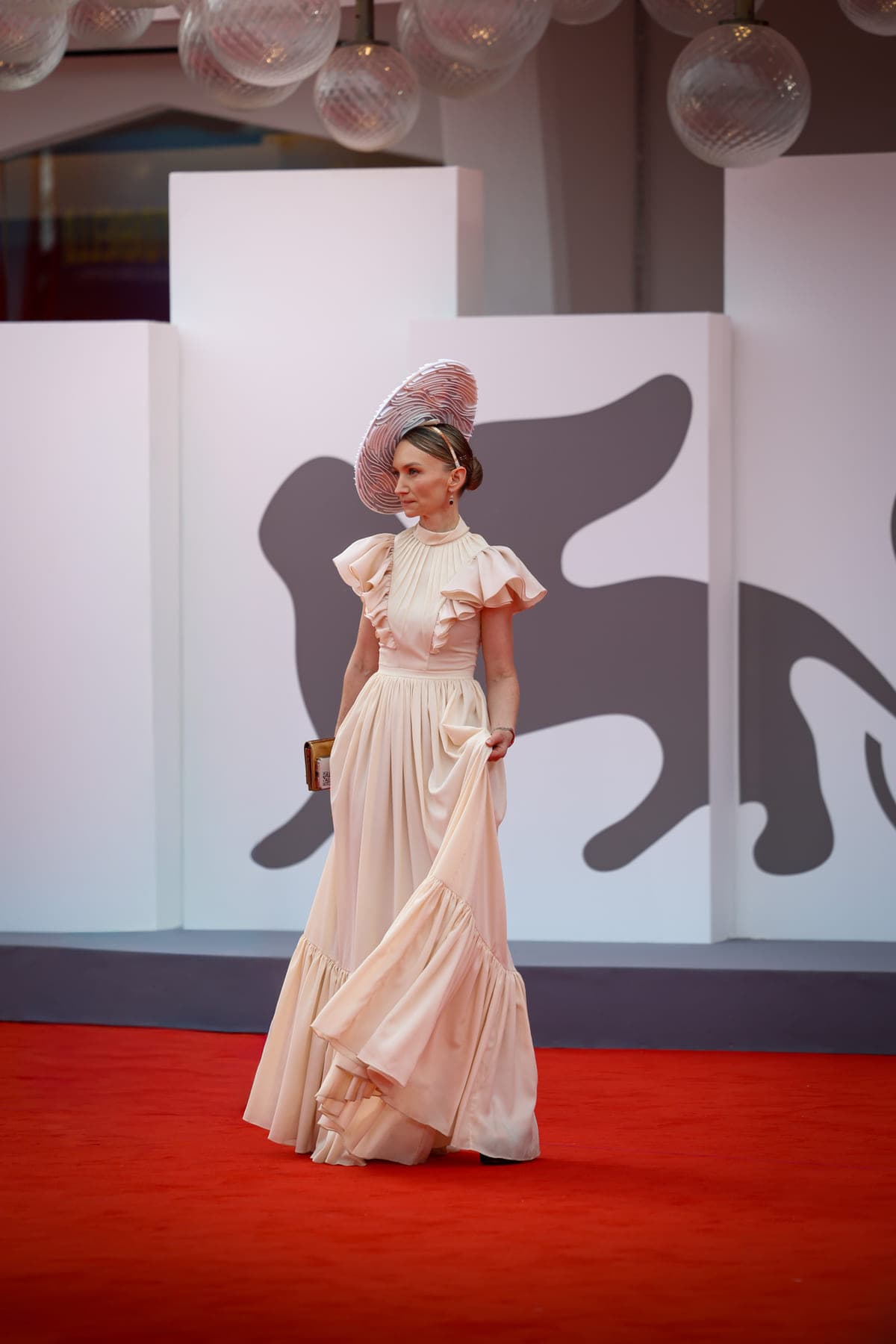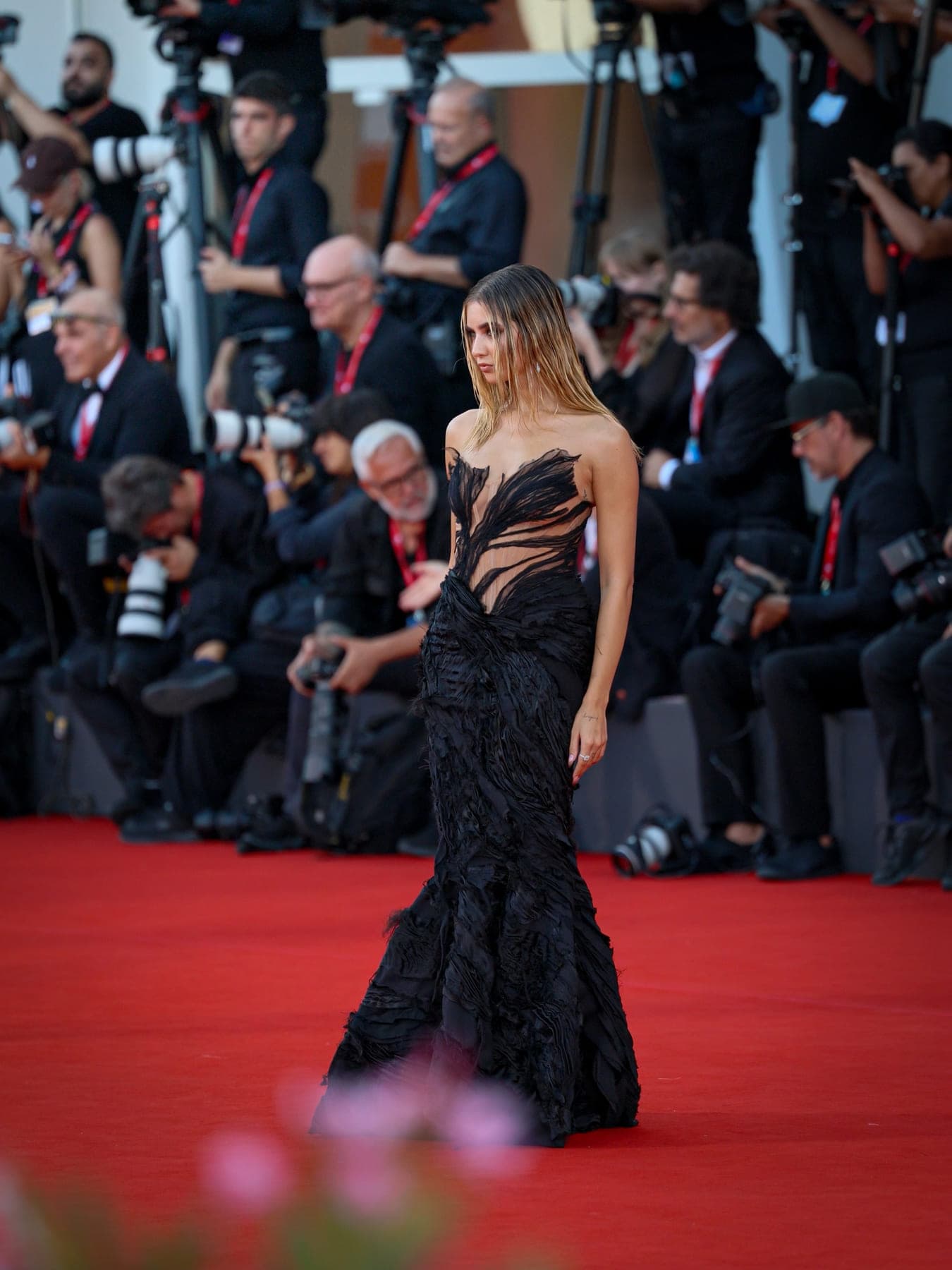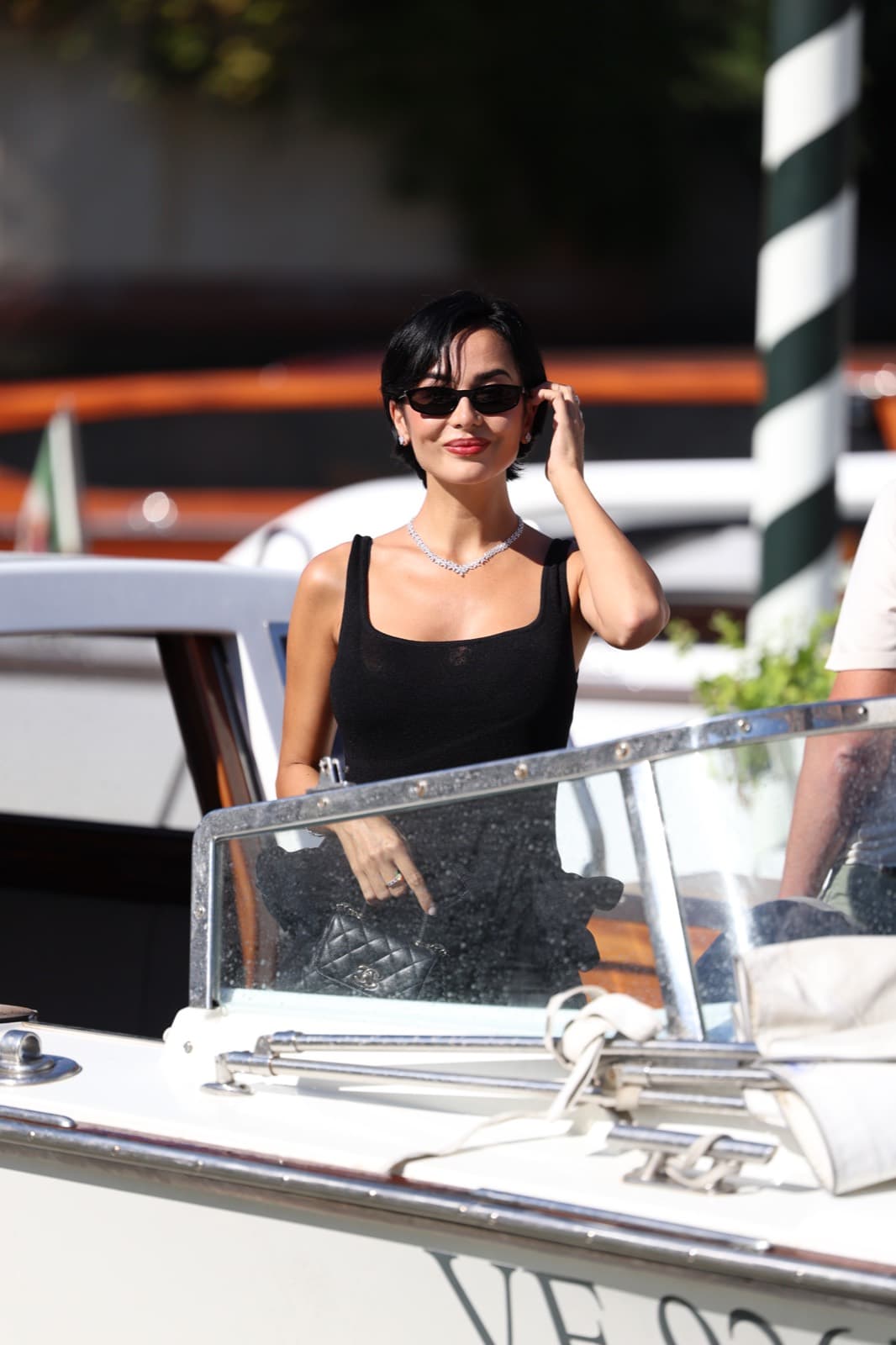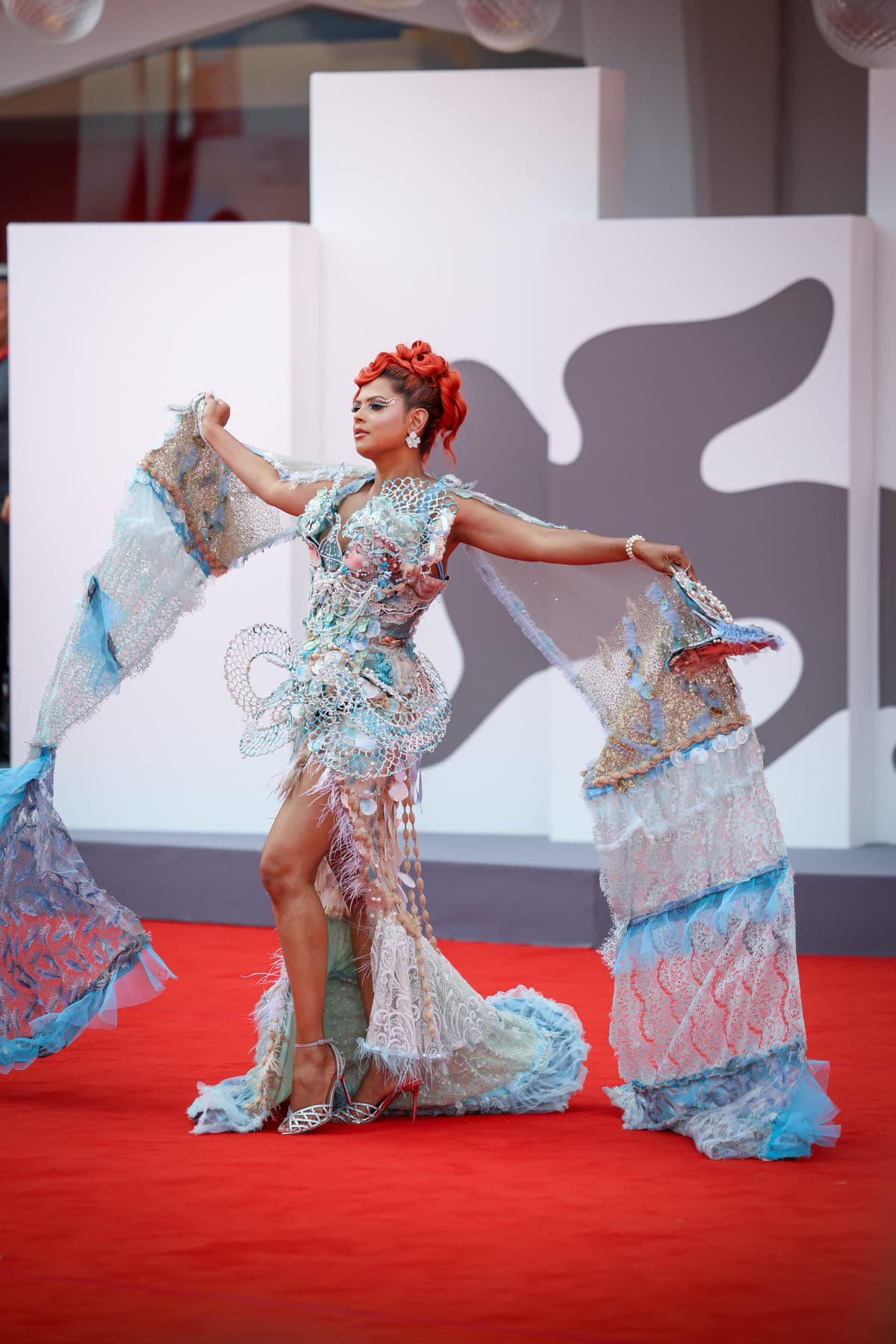
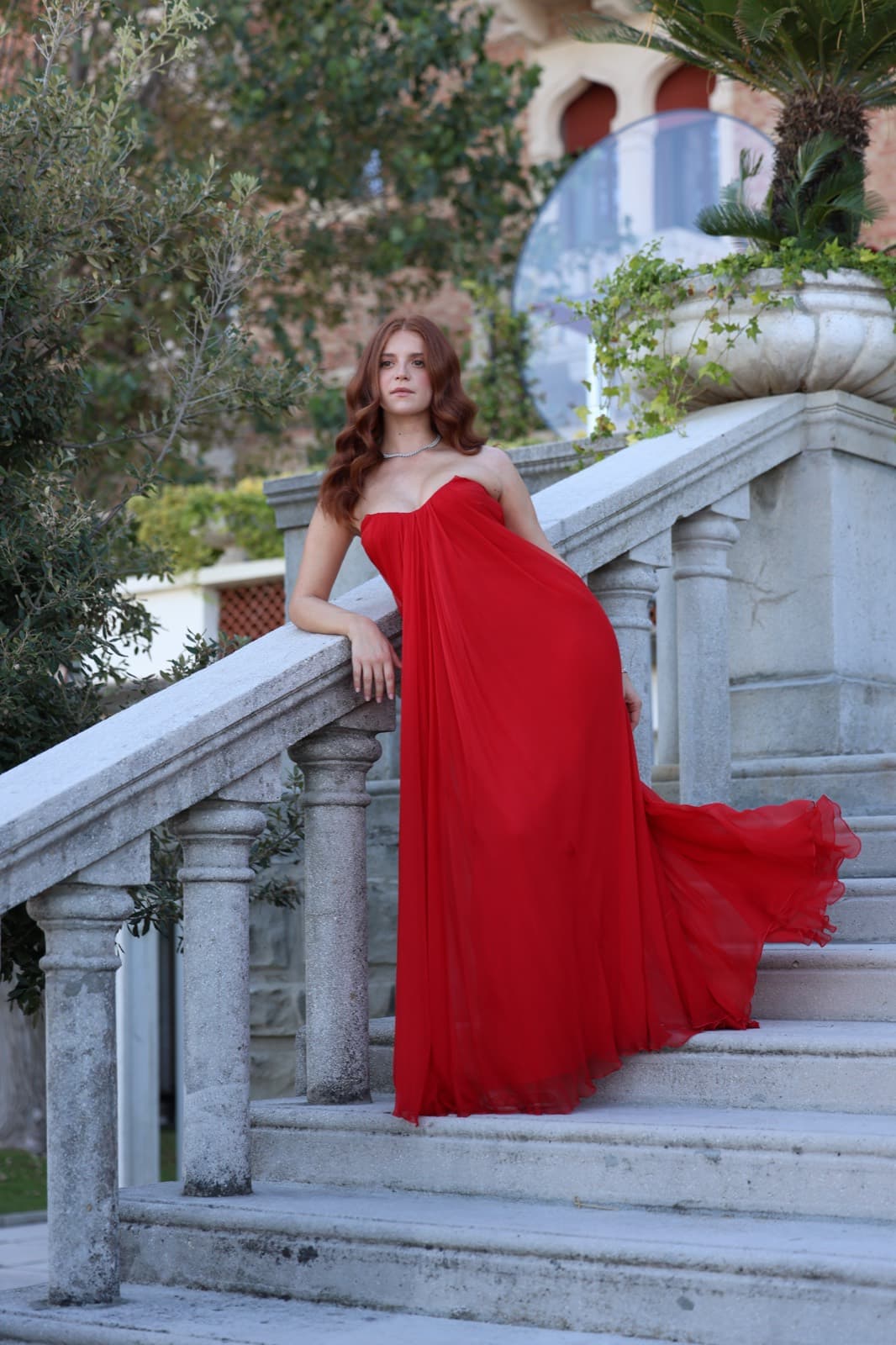
Not everyone who comes to Venice in September walks a carpet. A large part of festival week happens slightly to the side of it — in gardens, on staircases, in the hour before an invitation starts — and it produces, quite often, better images than the carpet does. There is no riser, no security, no fifteen-second window. There is a dress, a staircase and the light.
 One gown, one staircase, golden hour. Venice Lido, 6 September 2026. Photo: @visual.twins
One Location, Done Properly
This session used a single Venetian staircase and the olive trees around it. That is a deliberate constraint. Moving a client between five locations during festival week sounds ambitious and delivers less: you spend the good light in transit and end up with five half-covered setups instead of one complete one.
Forty minutes on one staircase gives you the wide establishing frame, the movement sequence, the three-quarter, the close portrait and the detail — a full edit, from one place, with consistent light and no wardrobe risk.
 The turn: the frame that only exists if the fabric is chosen for movement. Venice Lido, 6 September 2026. Photo: @visual.twins
Why Red, and Why Chiffon
Red is the hardest colour to photograph well and the easiest to photograph badly. It clips in the highlights, it bleeds on skin at close range, and under the wrong light it goes orange. Shot backlit in the last hour, in a fabric light enough to transmit rather than block, it does the opposite: the gown becomes a light source in its own right.
Silk chiffon was the whole point of this session. A structured gown holds a pose; chiffon holds a movement. Every frame here exists because there was enough fabric, and enough air, to throw.
 Backlit red, close range: the colour doing the lighting. Venice Lido, 6 September 2026. Photo: @visual.twins
Direction, Not Posing
The most useful thing a photographer does in a private session is not composition — it is conversation. A session that consists of instructions produces a folder of correct, inert pictures. The frame everybody actually keeps is almost always the one taken half a second after something made the subject laugh.
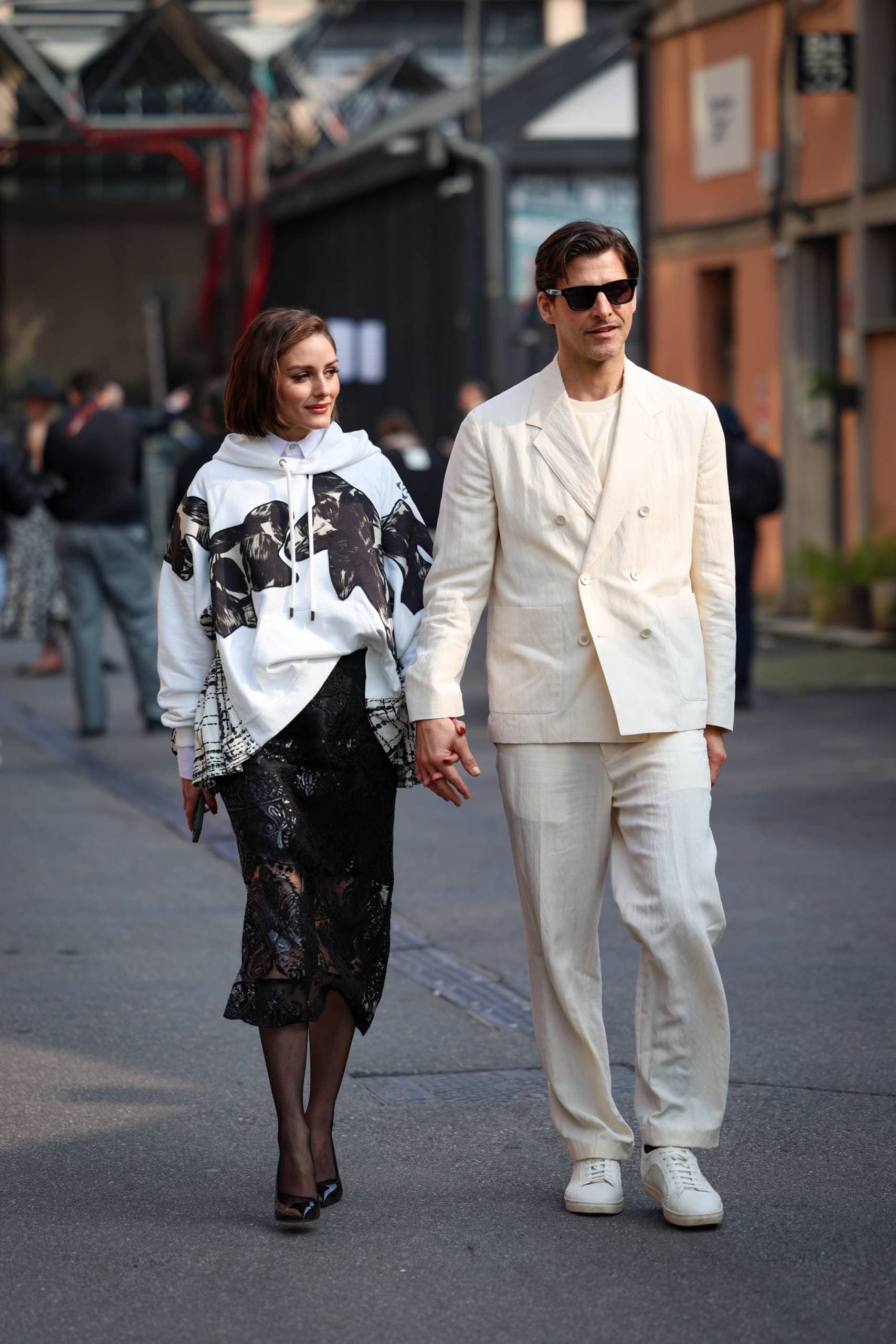
 The frame that gets printed. Venice Lido, 6 September 2026. Photo: @visual.twins
Stills and Motion, Separately
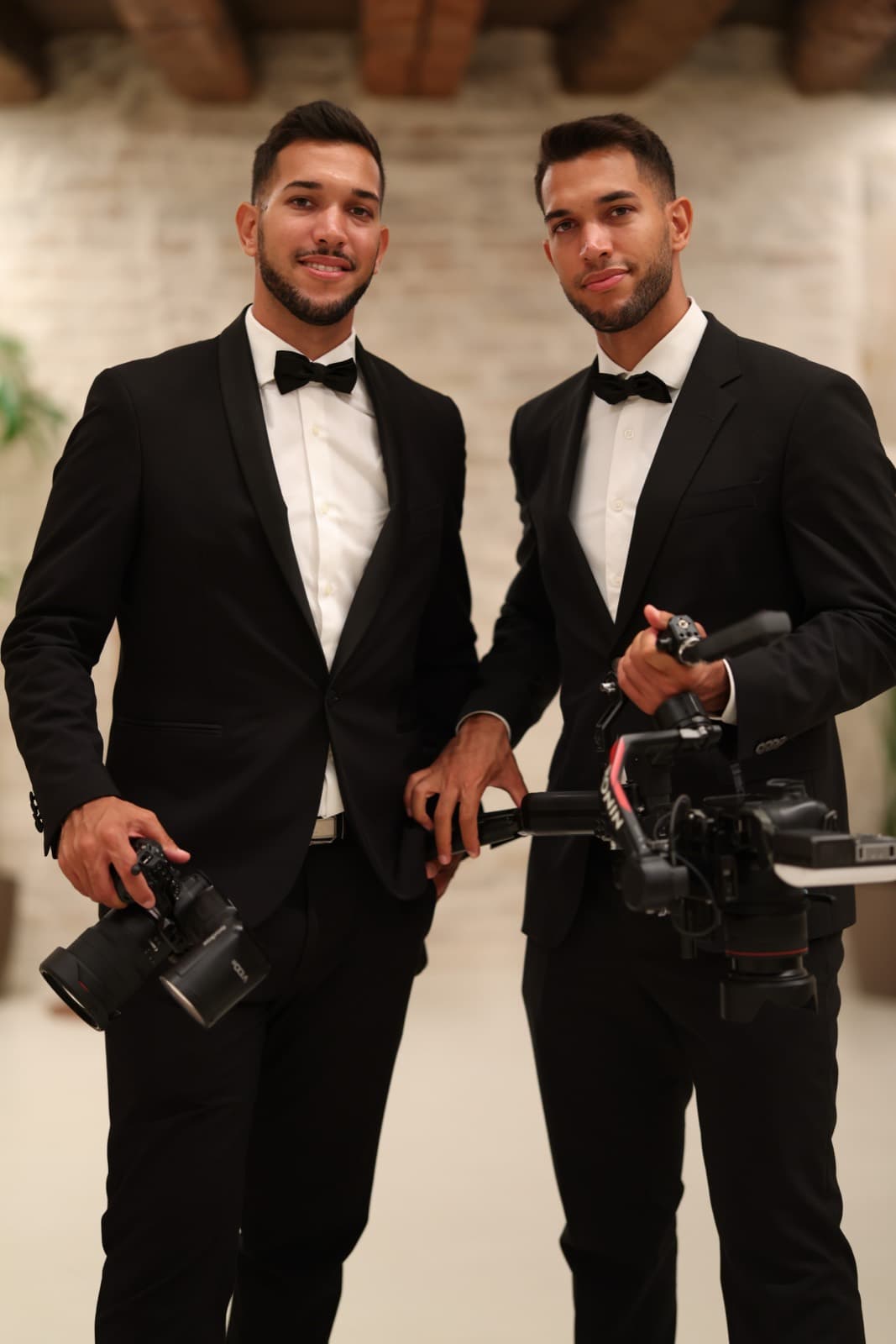
As on every job we take, this was covered as two crafts at once: one of us on stills, one on motion. Nothing here is a video frame-grab, and the motion edit is not a slideshow of the photographs. The client leaves with a set of images and a set of sequences, both shot properly, in the same forty minutes.
Booking During Festival Week
Festival week on the Lido is the densest and most difficult shooting window of the Italian year — and the most rewarding one. Locations are busy, light is short, and schedules move constantly. Sessions are best fixed well in advance, built around a single location, and timed to the hour rather than the afternoon.
Follow @visual.twins on Instagram for the full Venice 83 photo dumps and behind-the-scenes coverage.